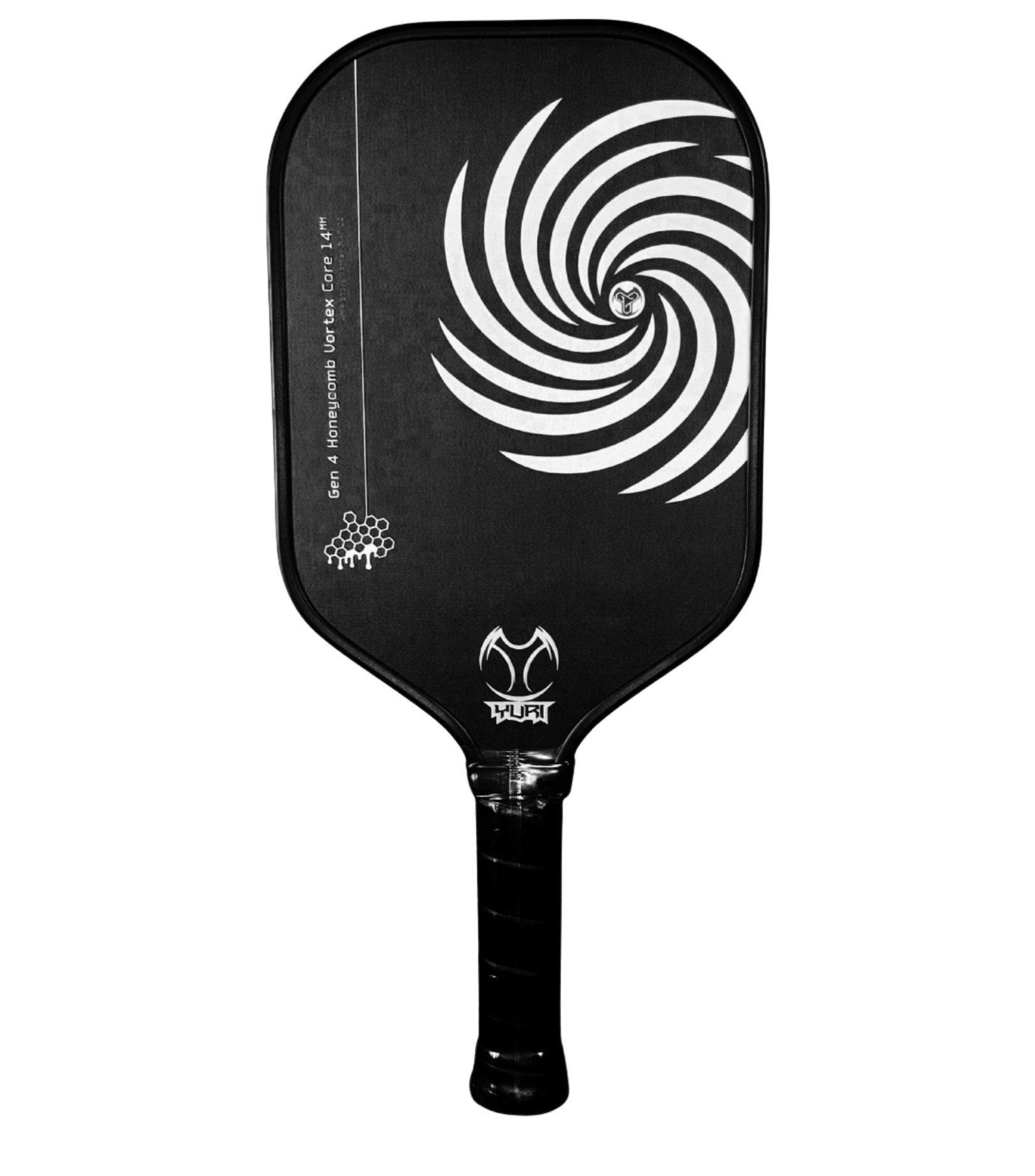
YURI FIELD GUIDE / 02
T700 vs. T800 Carbon Fiber Pickleball Paddles: What Matters Beyond the Label
Carbon grade is one useful construction detail. It is not a shortcut around the rest of the paddle: surface, core, shape, weight, and build decisions still matter.
 YURI / FIELD GUIDE
01
T700 and T800 are material labels—not complete paddle reviews
Carbon-fiber terminology can make it seem as if one line on a specification sheet settles the whole paddle decision. It does not. T700 and T800 identify carbon-fiber grades, but a player experiences the finished system: the face and surface, resin and layup, core, profile, shape, balance, grip, and perimeter construction working together.
That distinction matters because a higher-numbered material label is not a universal outcome. A player does not strike the ball with a grade name; they strike it with a paddle that has been designed, assembled, and tuned as a whole. The right question is how the published construction supports the response you want at contact.
YURI’s current catalog lists T-800 carbon faces on several Gen 4 and Spin Carbon models. Those models should be evaluated by the rest of their published details as well: Honeycomb or Foam Tech cores, 14 mm or 16 mm profiles, elongated or wide-head shapes, and listed player fits.
Open product briefs to confirm each current model’s face, core, profile, weight, and player-fit description.Browse YURI T-800 carbon-face paddle options02
What the paddle face contributes
The face is where a player’s swing becomes a shot. It is part of the feedback a player gets on serves, drives, dinks, resets, roll volleys, and counters. A carbon construction can contribute to the connected, responsive feel many advanced players look for, while the surface treatment participates in the ball interaction that helps a player create spin.
But face material is not a substitute for technique, and it is not the only input in spin. Surface texture, contact quality, the core, the ball, and a player’s mechanics all contribute. That is why it is more useful to read a paddle’s face alongside its listed surface and core than to compare carbon grades in isolation.
The current Signature field makes this visible in a different way. Vortex Pro, Cobra Strike, and The Wasp are listed with 120 Grit surfaces, but their core systems and player-fit descriptions differ. The Vortex Pro is published with a Gen 5 Foam Vortex core; Cobra Strike uses Honeycomb Propulsion; The Wasp uses Charged Hive Tech.
The technology page illustrates the three listed Signature core systems and their associated current models.See the YURI Signature construction studies The Vortex Pro detail page lists its 120 Grit Carbon surface, Gen 5 Foam Vortex core, 16 mm profile, and player-fit note.Explore the YURI Vortex Pro03
Read the construction from the surface inward
When you compare two carbon-faced paddles, build your reading order from the surface inward. First, identify the listed face or surface. Next, look at the core and profile. Then check the shape, weight, dimensions, and grip. Finally, read the player-fit description as a design intent—not a guarantee of how every player will experience the paddle.
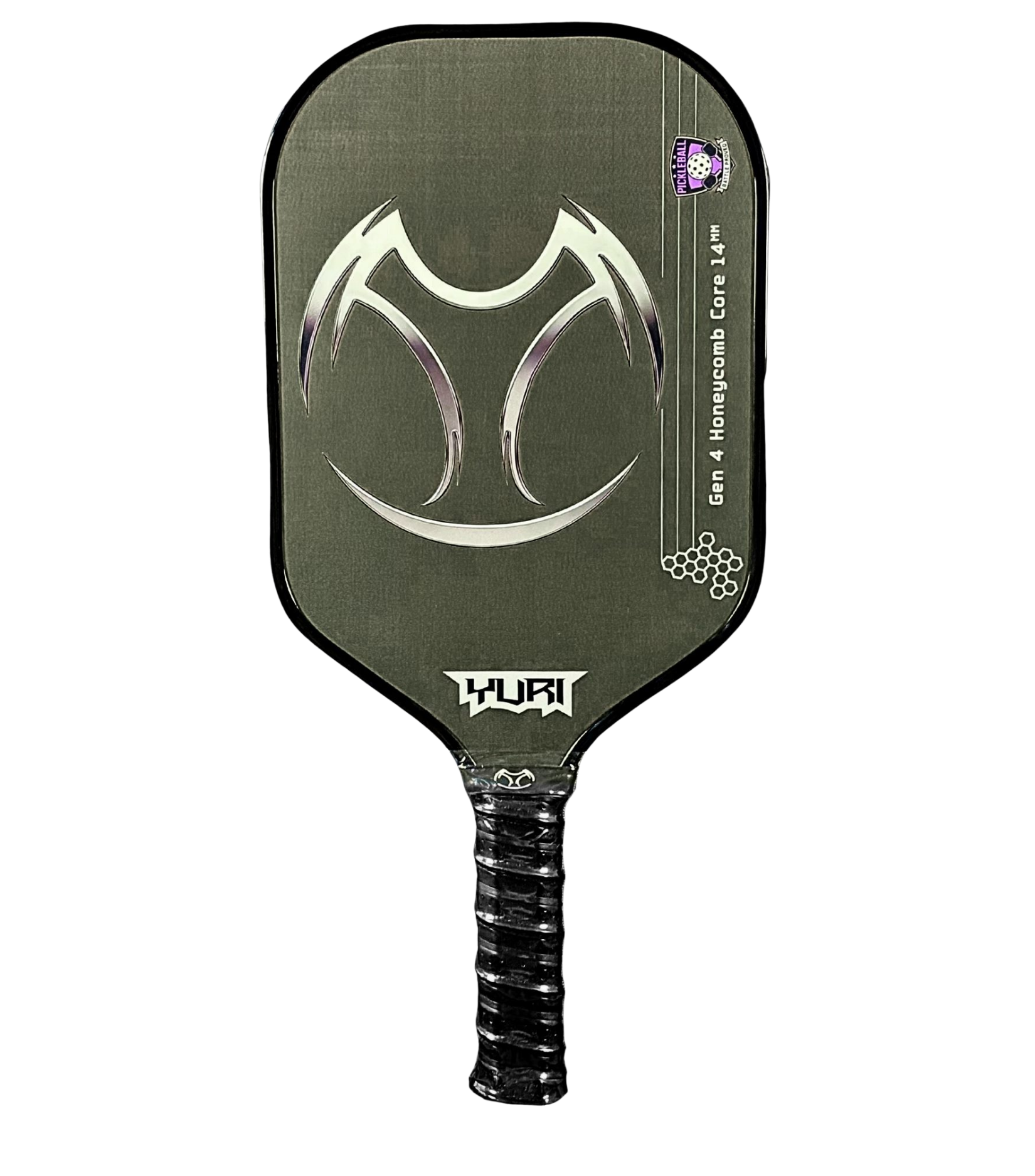
A practical example: Jett Black is listed as a 14 mm elongated offensive paddle with a T-800 carbon face and Honeycomb Core. Blaze Blue is listed as a 16 mm elongated offensive-plus paddle with a T-800 carbon surface and Foam Tech core. Golden Pickle is listed as a 14 mm, 7.6 oz wide-head Gen 4 Foam Tech option with a T-800 carbon face. The shared face family does not erase their different construction directions.
This is the advantage of a useful product brief. It gives a reader enough context to decide what to compare next, rather than forcing every buying decision into a single material claim.
Use the comparison tool to put two live models side by side before opening their full local product briefs.Compare YURI paddle construction and player fit04
Use carbon as a filter, then test the complete fit
Carbon terminology can be a legitimate filter for players who care about material selection. It should not be the last filter. Once you identify a face construction that interests you, use the core, profile, shape, and weight to narrow the decision to a small set of plausible options.
The most useful paddle is the one whose complete build helps you execute your own game with confidence. For some players that will mean an elongated offensive-plus frame. For others, a lighter wide-head shape or an all-around construction will be more relevant. The best next step is a specific comparison, not a generic material verdict.
Play with intent: read the construction, then choose the response you want to feel when the point starts.
YURI FIELD NOTE
Relevant YURI paddles to consider.
These recommendations use only the current catalog’s listed construction, profile, weight, shape, and player-fit information. Compare the full brief before you choose.
Gen 4 Honeycomb
Jett Black
$120A published T-800 carbon-face, 14 mm elongated offensive option with a Honeycomb Core.
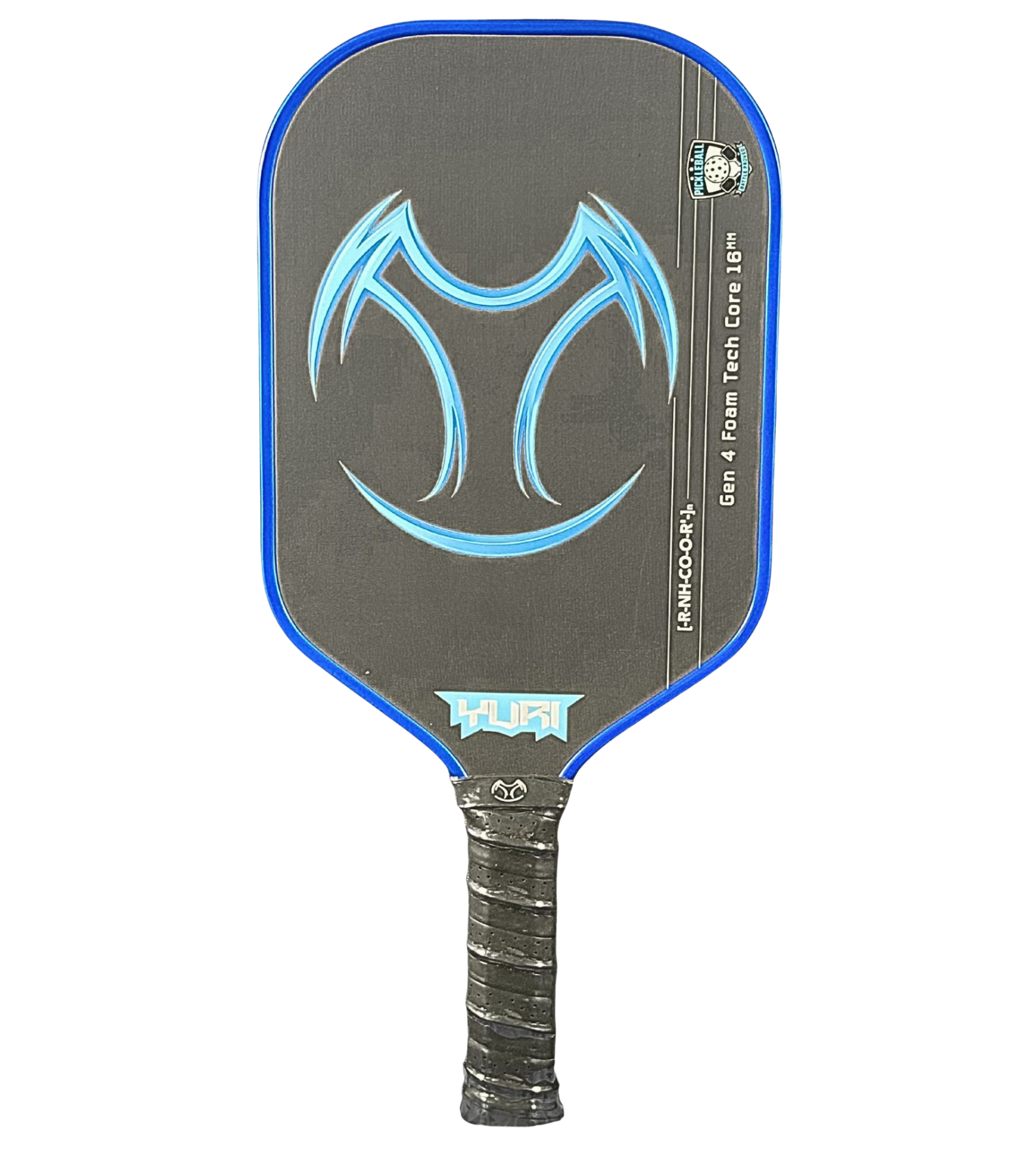
Gen 4 Foam Tech
Blaze Blue
$120A published T-800 carbon-surface, 16 mm elongated offensive-plus option with a Foam Tech core.
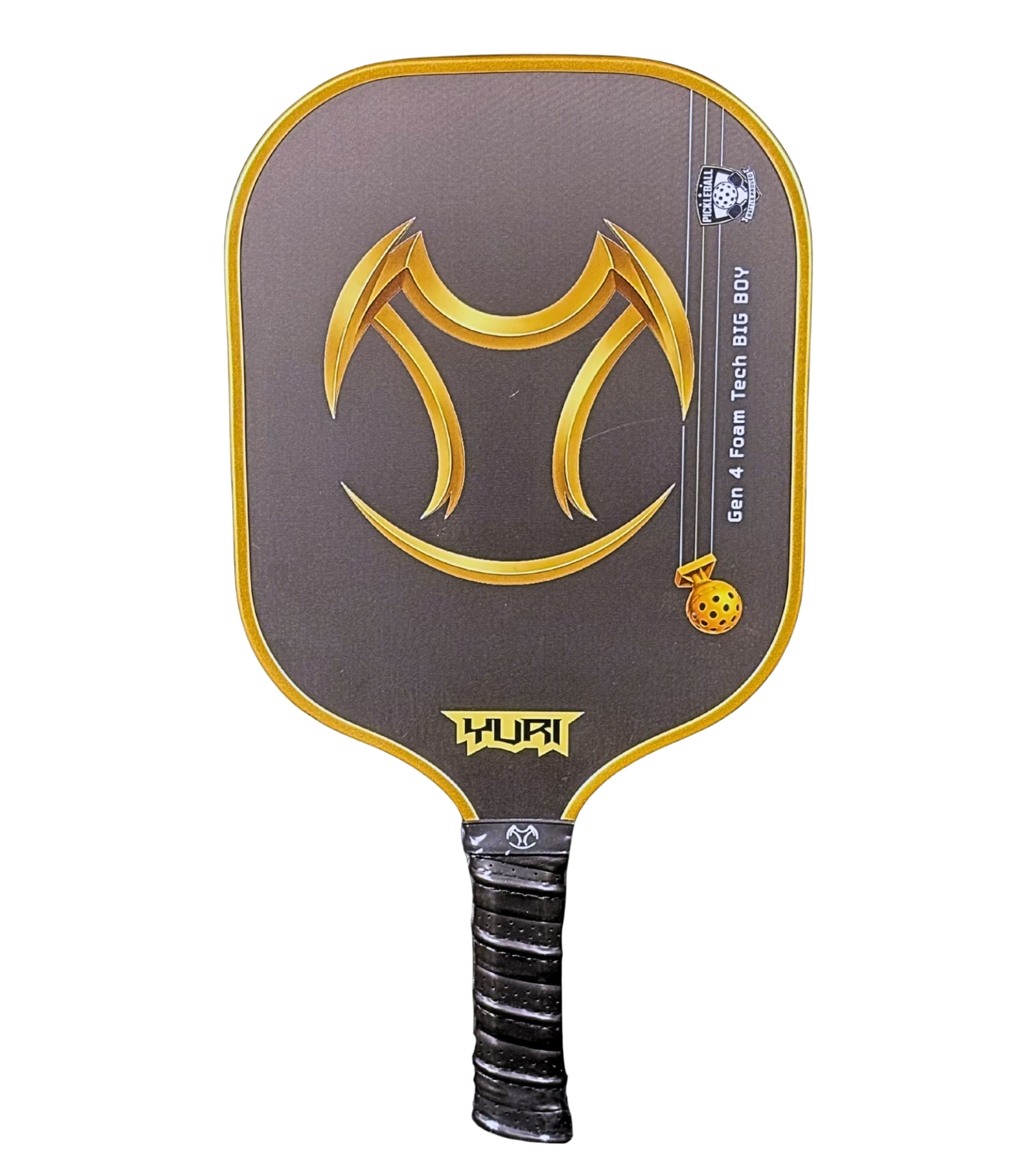
Gen 4 Foam Tech
Golden Pickle
$120A published T-800 carbon-face, 7.6 oz wide-head option for touch, control, placement, and a larger hitting area.
QUICK ANSWERS
Questions this guide answers.
Is T800 carbon fiber automatically better than T700 in a pickleball paddle?
No. Carbon grade is one construction detail. The face, surface, core, profile, shape, weight, manufacturing, and player technique all contribute to the finished paddle response.
Do all YURI pickleball paddles use T-800 carbon?
No. Several current Gen 4 and Spin Carbon models list T-800 carbon faces or surfaces. The current Vortex Pro detail lists a 120 Grit Carbon surface and Gen 5 Foam Vortex core, so review each live product brief for its published construction.
What should I compare after carbon fiber?
Compare the listed surface, core, profile, weight, shape, dimensions, grip, and player-fit note. Those fields help explain how the complete paddle is designed to feel and play.