YURI FIELD GUIDE / 01
How to Choose a Pickleball Paddle: A Guide to Power, Spin, Control & Feel
A useful paddle decision begins with the response you want at contact—not one headline material or a crowded specification sheet.
 YURI / FIELD GUIDE
01
Start with the shots you want to trust
Choosing a pickleball paddle is no longer a one-specification decision. Surface, core, profile, shape, weight, balance, and grip all influence the way a paddle moves through the point. Two paddles can look similar on the rack and still give a player a very different read at contact.
Start with the situations that define your game. An attacking player may care most about a direct, elongated response on drives and counters. A player who constructs points through drops, resets, and placement may prioritize a more forgiving shape or an all-around feel. Players who use heavy topspin often want a surface and core combination that helps them stay connected to the ball while accelerating through it.
The useful question is not whether a paddle is universally powerful or controlled. It is whether its construction, profile, and shape make sense for the way you already play—and the shots you want to develop next.
Use the internal comparison tool to review surface, core, profile, weight, shape, and player-fit notes side by side.Compare current YURI paddle specifications02
Read the face and surface as part of a system
Carbon-fiber language is common in performance pickleball, but the label alone does not describe the whole paddle. The face works with the surface treatment, core, edge construction, profile, and the player’s technique. That is why two carbon-faced paddles can still feel meaningfully different.
For spin, technique remains central. The paddle face and surface are part of the ball-contact equation, helping a player create and direct rotation on drives, roll volleys, serves, slices, drops, and angled dinks. A surface should support the player’s ability to shape the ball without turning the rest of the paddle decision into an afterthought.
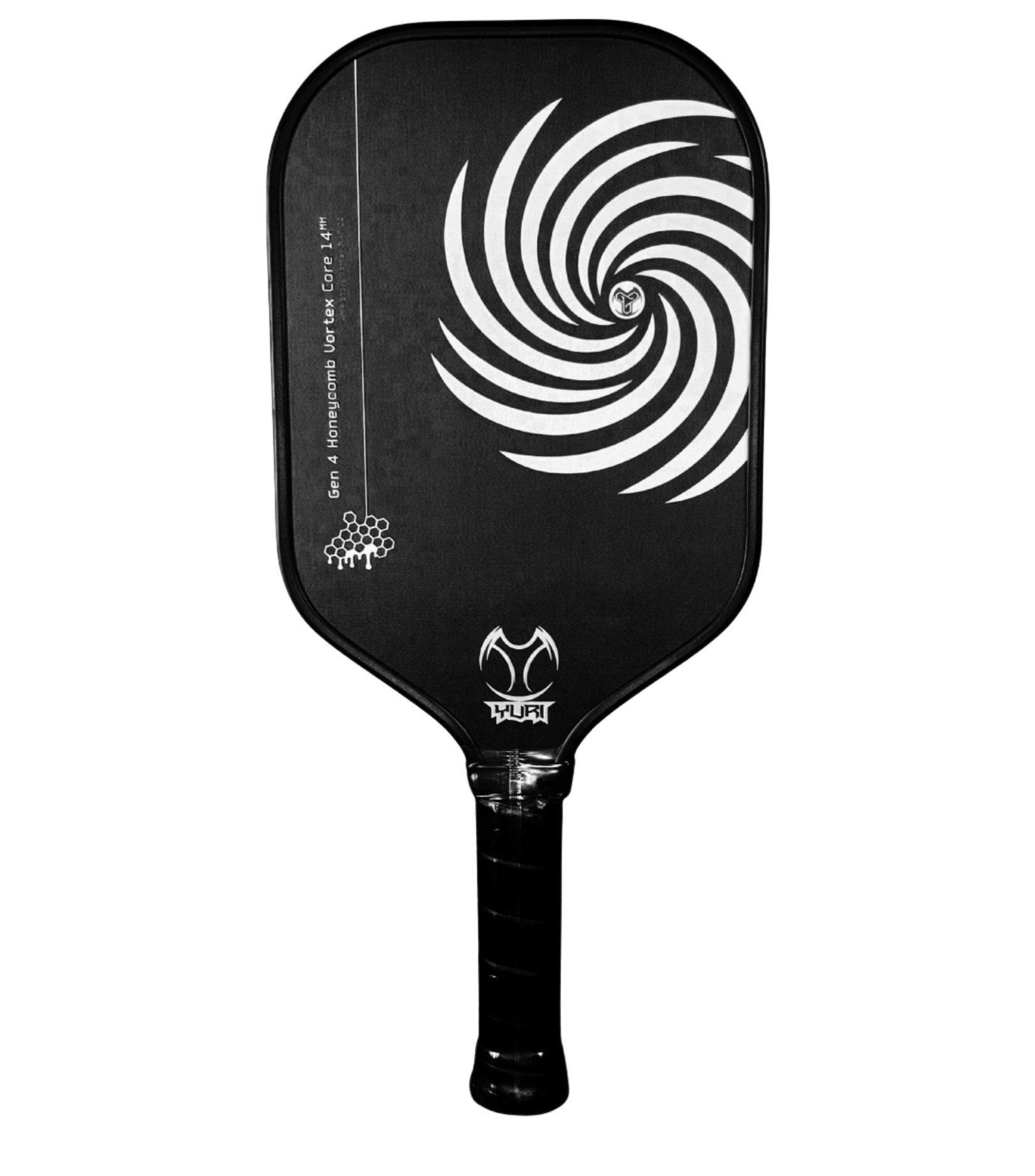
In YURI’s current Signature Black & White field, the Vortex Pro, Cobra Strike, and The Wasp are listed with 120 Grit surfaces, then differentiated by their core systems and player-fit notes. That gives a player a consistent surface story with three different construction directions.
See the illustrated Charged Hive, Honeycomb Propulsion, and Gen 5 Foam Vortex systems behind the Signature series.Study YURI Signature paddle construction The Vortex Pro pairs a 120 Grit Carbon surface with a Gen 5 Foam Vortex core in a 16 mm elongated frame.Explore the Vortex Pro 120 Grit Carbon surface03
Use weight, shape, and profile to narrow the field
Weight changes more than a number on a product card. A lighter paddle can feel quick in the hand, while additional mass can contribute to a more planted sensation through contact. The current YURI catalog ranges from 7.6 oz wide-head models to 8.8 oz elongated offensive-plus frames, so the right starting point depends on how you value hand speed, stability, and momentum.
Shape determines where the paddle gives you room. Elongated frames often suit players who prefer reach and an attacking geometry. Wide-head paddles put more width across the face and can be a useful direction for players who want a larger hitting area. Profile is another cue: 14 mm and 16 mm models need to be judged in the context of their full construction rather than treated as an automatic power-or-control verdict.
Grip deserves the same attention. The dimensions on the catalog help create a starting point, but comfort, hand size, overgrip preference, and the way a player changes grips during a point remain personal. If possible, use the listed grip dimensions to identify candidates, then judge the handle in your own hand.
Filter the internal catalog by series, then open each local product brief for the verified dimensions and construction.Browse the complete YURI paddle directory04
Build a short list, then make the trade-offs explicit
A good shortlist is more useful than a long list of impressive claims. Pick two or three models, compare their listed surface, core, shape, profile, weight, and player-fit notes, then ask what you would be giving up with each choice. A paddle that feels ideal for a counterattack may not be the same option that best supports a wider, more forgiving hitting area.
For example, the Vortex Pro is listed as an elongated offensive-plus Signature model for advanced players who use heavy topspin and want a direct response. The Wasp is listed as an elongated all-around Signature option for players who want controlled touch and maximum spin with less pop than a propulsion core. Golden Pickle is listed as a lighter, wide-head all-around option built around touch, control, and placement. These are not rankings; they are starting points for matching a build to a player’s priorities.
The final decision should leave you confident that the paddle supports the shots you want to hit. A specification can point you in the right direction. The fit comes from the complete system.
Review the two Signature models’ player-fit notes, core systems, profiles, and shared 120 Grit surface.Compare Vortex Pro and The WaspYURI FIELD NOTE
Relevant YURI paddles to consider.
These recommendations use only the current catalog’s listed construction, profile, weight, shape, and player-fit information. Compare the full brief before you choose.
Signature Black & White
Vortex Pro
$145A 16 mm elongated offensive-plus Signature paddle for advanced players who use heavy topspin and prefer a direct response.
Signature Black & White
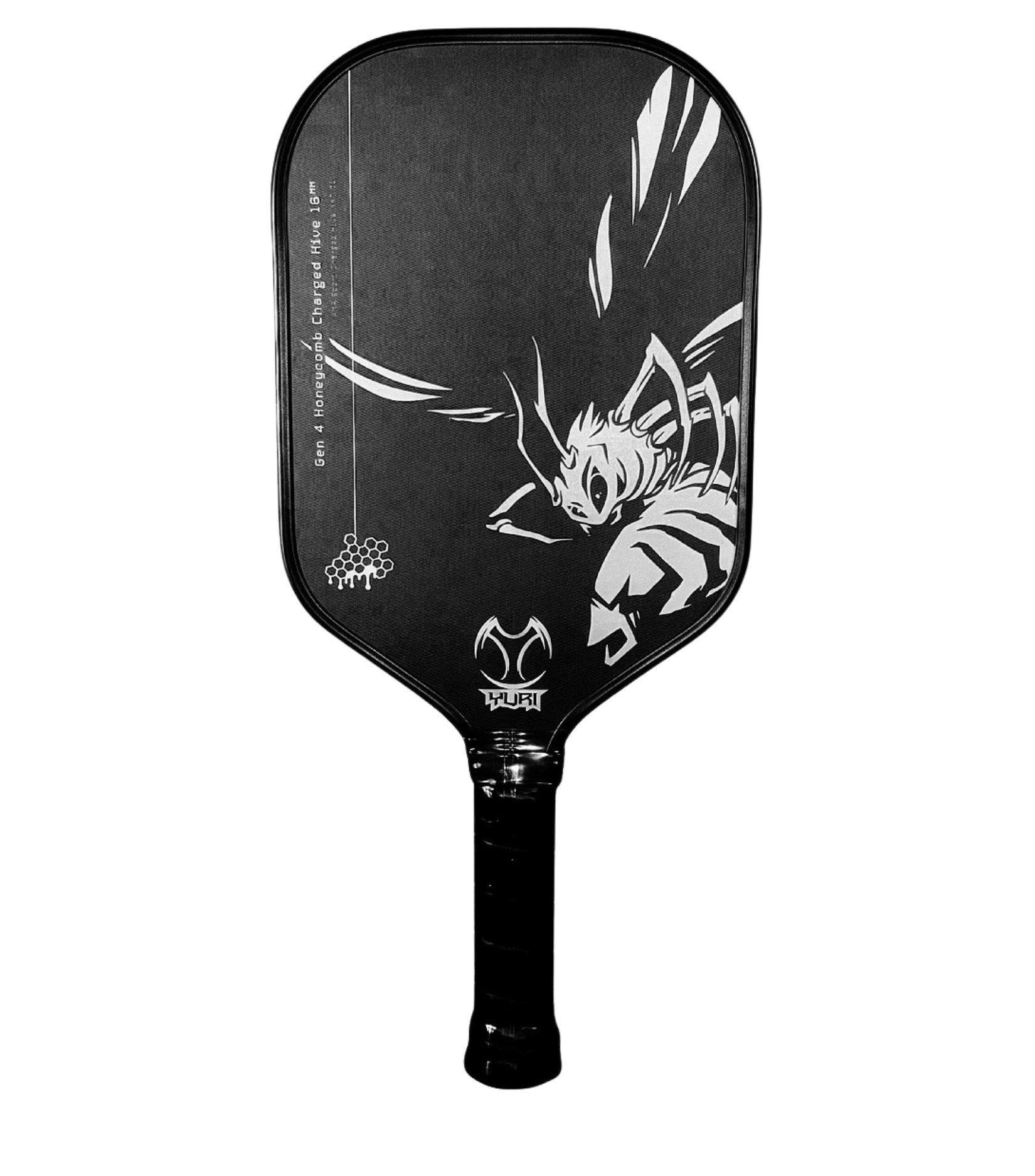
The Wasp
$145A 16 mm elongated all-around Signature paddle for controlled touch, maximum spin, and less pop than a propulsion core.
Gen 4 Foam Tech
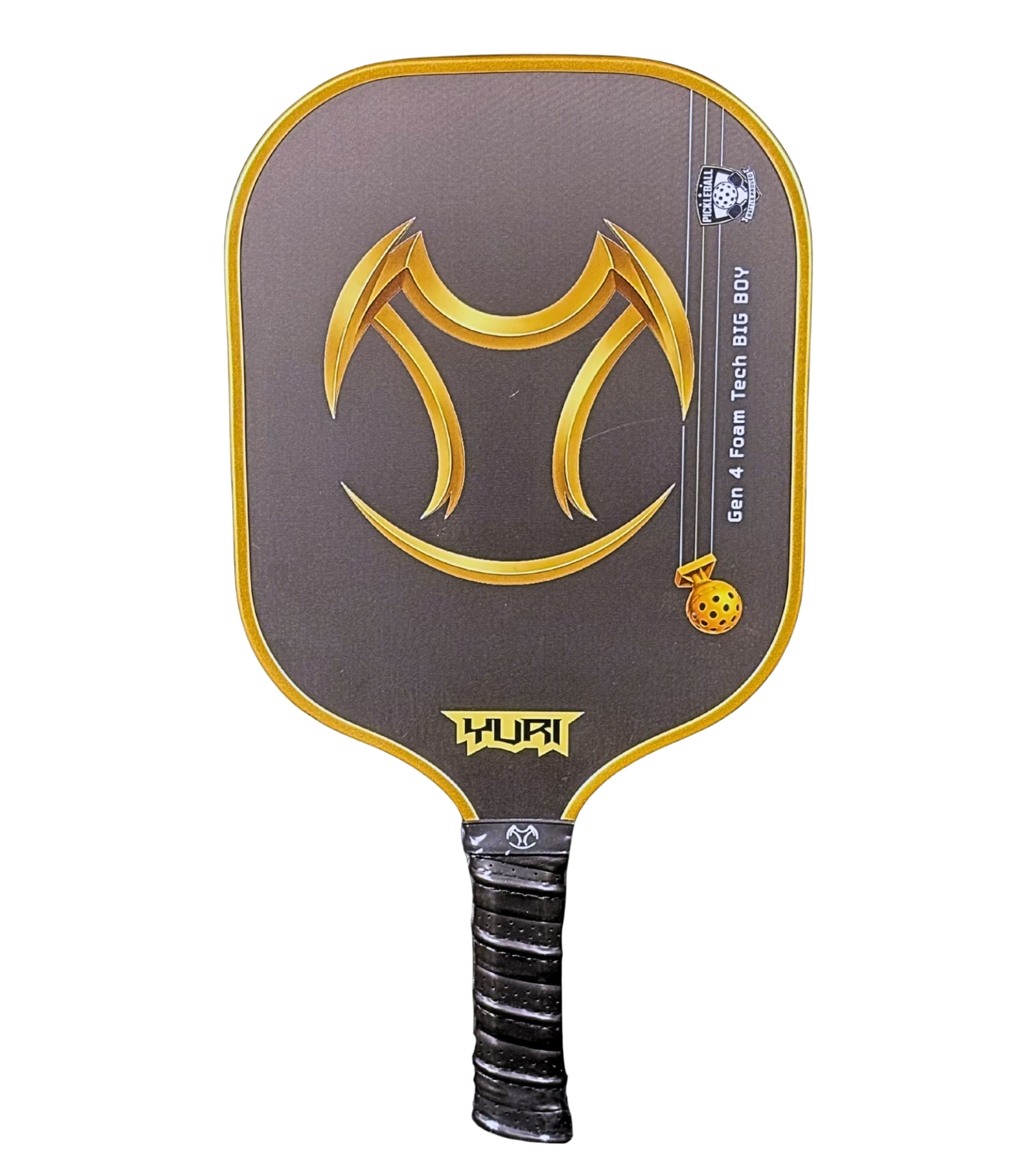
Golden Pickle
$120A lighter 7.6 oz wide-head Gen 4 Foam Tech option for players who value a larger hitting area, touch, control, and placement.
QUICK ANSWERS
Questions this guide answers.
Should I choose a pickleball paddle for power or control?
Treat power and control as trade-offs within a complete construction system. Compare the surface, core, profile, shape, weight, and your own shot preferences rather than relying on one label.
Does a thicker pickleball paddle always mean more control?
No single thickness determines the entire response. Profile matters alongside the core, face, shape, weight, and the player’s technique.
What should I compare before buying a YURI pickleball paddle?
Start with the listed player fit, surface, core, profile, weight, shape, dimensions, and grip. Use YURI’s internal comparison page to review current models side by side.